
First place, perhaps unsurprisingly, goes to the U.S Dollar with almost 85 percent of the transactions in foreign exchange markets involving the dollar. Until the establishment of the Federal Reserve System in 1913, various currencies were issued in the U.S. In the late 18th century and during the American Revolution, the Continental Congress printed its first paper money, but with inflation rapidly increasing, it quickly became worthless. The First Bank of the United States established in 1791 was the first attempt at central banking, which was not well-received by a mostly agrarian electorate. The Second Bank of the United States of 1816 had a similar story. The Free Banking Era (1836–1865) had state-chartered banks and unchartered “free banks,” issuing their own notes which were redeemable in gold. Following the financial panics of the late 19th and early 20th century, the American public was ready for a central bank and in 1913, President Woodrow Wilson signed the Federal Reserve Act into law. The rest is history.
Even though it was only introduced in 1999, the Euro has since become the second highest-traded currency in the world with around a 39 percent share in daily transactions. Introducing a new common currency and a central bank that oversees this currency was not an easy task. Getting rid of the German mark, French franc, Italian lira, and all the other European currencies took a great deal of organisation to replace them all with the euro. Since the early 1960s, the central banks of the European Economic Community had been trying to coordinate their monetary policies and promote price stability. The Maastricht Treaty of 1992 put a long-contemplated idea on paper: a common currency. In 1998, the European Central Bank was established and in 1999 the Euro was introduced.
3) The Japanese Yen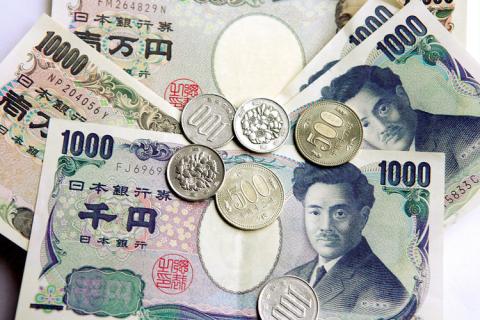
With a share of over 19 percent of the daily currency transactions, the Yen takes the Number 3 spot. The history of the yen goes back to 1871 when it was adopted officially as the Japanese currency by Japan’s Meiji government. In 1882, the Bank of Japan was established under the Bank of Japan Act as the country’s central bank. At the end of World War II, the Bank was reorganised in 1942 according to the new Bank of Japan Act. The Act of 1942 states the objectives of the Bank as regulating the currency as well as controlling and facilitating credit and finance to enhance the country’s general economic performance. The Act of 1942 was amended several times after World War II and was completely revised in 1997 to reflect the modern principles of central banking: independence from fiscal authority and transparency.
The British pound has a share of almost 13 percent in daily currency trades. The official name of the currency is pound sterling. As one of the oldest central banks in the world, the Bank of England was founded in 1694 to act as the government’s banker and debt-manager. It began issuing notes the same year, where notes had a few lines of engraved text, promising to pay a specified sum at the Bank’s premises with spaces for a handwritten date, number, signature, and the name of the payee. In 1734, the Bank moved to Threadneedle Street in London and is still located there today.
The Australian Dollar has over 7.6 percent share in daily currency transactions. Prior to 1911, private trading banks were issuing currency in Australia and in 1911, legislation established the Commonwealth Bank of Australia. However, at that time the bank was just like a commercial bank and did not assume the responsibilities of a central bank. Then, the Australian Department of the Treasury was in charge of issuing notes. In 1924, the Commonwealth Bank Act was amended and the Bank was given control over the note issue. From this time until 1945, the Bank gradually evolved its central banking activities. In 1959, part of the Commonwealth Bank of Australia was renamed as the Reserve Bank of Australia to fulfill the functions of a central bank. The commercial banking functions were kept by the Commonwealth Bank of Australia.