
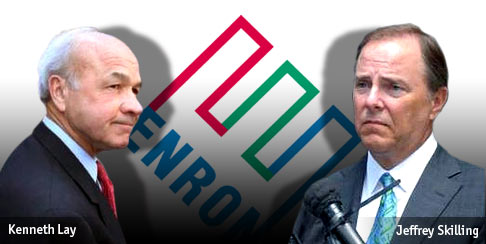
Enron: the name itself has come to connote corporate greed, and shattered dreams. But, before the company went bankrupt practically overnight, Enron was one of the most respected companies in the world.
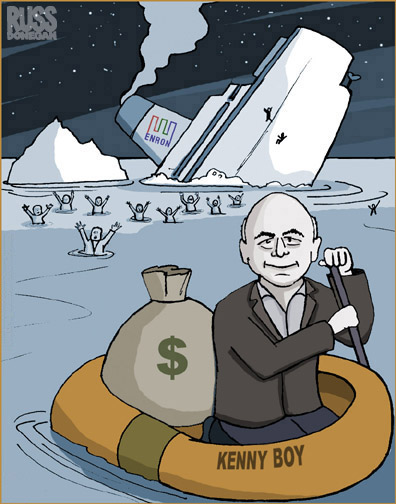
As a leading energy, and commodities corporation headquartered in Houston, Texas, Enron was voted “America’s Most Innovative Company” by Fortune Magazine for six years in a row prior to its sudden demise in 2001. When the company sank, 20,000 employees lost their jobs, and medical insurance. Most upsetting of all was that, while employees received an average severance pay of $4500, top executives had received $55 million in bonuses. Employees had been encouraged to transfer their 401(k) funds into Enron stock, and when the stock failed, so did their dreams of a tranquil retirement. One disgruntled employee later stated: “At the peak, I had about $348,000 worth of Enron stock. When the company crashed, I sold it all for $1200.”
As investors, and employees, it is important and appropriate to take a look back at what went wrong, and how no-one saw it coming.
A) Accounting Fraud
The first part of the con was that, for years, Enron had been lying about its revenues. In 2000, Enron claimed revenues of $111 billion. While it was true that Enron was relatively successful in the pulp and paper industry, and a major supplier of electricity and natural gas, $111 billion was a stretch.
The good news is that publicly-traded American companies began being held to new accounting standards following the Enron scandal. Specifically, the Sarbanes–Oxley Act of 2002 now requires that the board, management, and accountants of major corporations adhere to stricter laws which make Fraud much more difficult, and takes the responsibility of business leaders to new ethical standards.
B) Ties to the Bush Administration
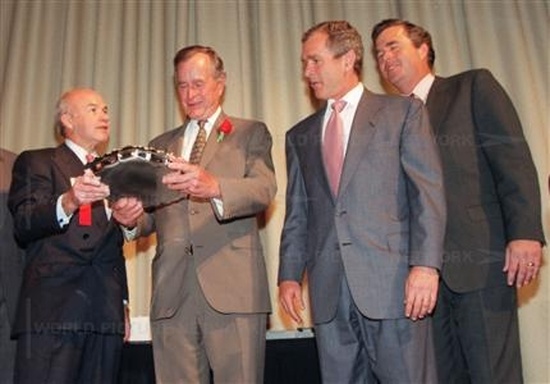
Ken Lay with George Bush Junior and Senior.
From 1985 to 2002, Kenneth (a.k.a. Ken) Lay was CEO and chairman of Enron, and during that time, his ties to the Bush family have caused millions to question the dangerous ties between government and big businesses. Lay and other prominent oil businessmen funded many of George Bush Junior’s election campaigns, and, as the Governor of Texas, Bush Jr. made many phone calls on behalf of his oil pals regarding deregulation of the energy industry.
Deregulation would give the oil men greater control over the pricing of the commodity, and give more power to the big corporations. “Rich, you have been fantastic to the Bush family,” said Bush Senior, in a surprise birthday video compilation for a leading Enron oil man. “I don’t think anybody did more than you did to support George, and of course, in this stage of mine and Barbara’s life, that’s what really matters, your family, and your friends.”
Many have claimed that close government ties created a feeling of invincibility amongst Enron execs, and the dangerous belief that they were “above the law.”
C) The Investment Banks Went Along for the Ride
Prior to Enron’s bankruptcy, the major investment banks covering Enron’s stock analysis, all had strong “buy” ratings on the stock, valuing a share at $100 to $115. At the court trial following the bankruptcy, Senator Joseph Lieberman asked: “why were the analysts blinded to the company’s deceit?” The answer was an indirect bribery game.
For over a decade prior to its collapse, John Olson, an analyst at Merrill Lynch was one of the only voices on Wall Street Bearish on Enron. Prior to Olson being laid off, Enron executives had informed Merrill Lynch that either they find an analyst who will give them a “buy” rating, or the company will refuse to do business with them. Soon after, Olson was fired from Merrill, and Andrew Fastow, Enron’s Chief Financial Officer, sent two investment banking jobs worth $50 million to Merrill Lynch.
It was later discovered that the same game was being played with many other big bankers, including J.P. Morgan, Chase, Barclays, Credit Suisse, Royal Bank of Scotland Group PLC, and FleetBoston Financial Corp.
Summary
Following the Enron scandal, Wall Street was forced to go through some major reforms. Other accounting scandals, such as Worldcom, were brought in front of the US Supreme Court, along with the perpetrators of the Enron scandal. Kenneth Lay and Jefferey Skilling, another top Enron exec, were sentenced to 24 and 45 years in prison, respectively.
“There was no way I thought it would go belly up,” said George Maddox, aged 78, and a former Enron employee. “But it’s not like something we just sit and cry over every day. It is what it is.” All in all, the stock’s collapse led to the loss of over $60 billion in market value, and $2 billion in pension funds.