
When Johannes Gutenberg invented the printing press in 1439, I believe he realized he was on to something big. Compared to the former method of making ink impressions by means of rubbing laboriously, Gutenberg’s invention was a giant leap in speed and efficiency. The publishing industry was created, and it included newspapers, and printed books.
Fast forward to the new millennium, and the introduction of eBooks. An eBook is, in Wikipedia’s words, “a book-length publication in digital form, consisting of text, images, or both, readable on computers or other electronic devices.” In the US, already 28% of the adult population has read an eBook, and the number seems to be increasing. Aside from book-length publications, financial analysts are continually wondering if traditional print publishing will, one day, be overtaken by digital media, such as online websites continually producing new content.
In an article for the Wall Street Journal, entitled, “Don’t Burn Your Books—Print Is Here to Stay,” Nicholas Carr asserts: “The initial e-book explosion is starting to look like an aberration. The technology’s early adopters, a small but enthusiastic bunch, made the move to e-books quickly and in a concentrated period. Further converts will be harder to come by.” Carr cites statistics from the Association of American Publishers, and Pew Research Center. In addition, he speculates that the feel of traditional books (being able to hold it in your hands), and the fact that you can place a printed book on a real physical shelf in your home, are two distinct features of traditional printed books which consumers are very attached to.
Meanwhile, Tien Tzuo, co-founder and CEO of Zuora Inc., a software company specializing in subscription-based e-commerce business models, believes that digital media is not in the midst of a fight-to-the-death battle with traditional publishers. Instead, traditional publishing companies already have vast networks of writers and relevant personnel, which are quickly adapting to the digital age. By means of websites, and social media teams, the newspapers with stellar brand names dating back decades, have managed to remain profitable and relevant in the turn of the new century.
“So as long as papers continue to create great content,” says Tien Tzuo, “and hire quality journalists that come up with inventive new ways to bring their readers into the fold, they’ll do just fine.”
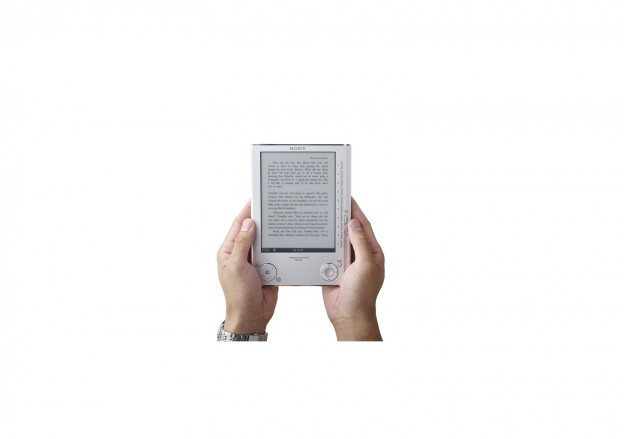
Large tech companies are becoming increasingly aware of trends relating to how consumers consume media. Amongst the new devices which are compatible with eBooks, and digital content, are the Sony Reader, Amazon Kindle, Kobo eReader, and Barnes & Noble Nook. As the golden rule of marketing goes: “wherever the eyeballs are, that’s where your content has to be.”